Key facts
- Founded
- 1946
- Founded by
- Trevor Wilkinson, Jack Pickard
- Country
- United Kingdom
- Headquarters
- Walliswood, Surrey, United Kingdom
- Legal name
- TVR Electric Vehicles Limited
- Famous models
- Griffith, Chimaera, Cerbera, Tuscan, Sagaris
- Website
- tvr.co.uk
TVR Brand History
TVR was founded in 1946 in Blackpool, England by Trevor Wilkinson, initially operating as Trevcar Motors before being renamed TVR Engineering in 1947. The first original car was built in 1949 and the Grantura model entered production from 1958 onward. Wilkinson left the company in 1962 after its early years of growth.
The brand experienced several ownership transitions beginning with Martin Lilley in 1965 who continued models such as the Vixen and Tuscan V8. Peter Wheeler acquired the company in 1982 and shifted focus toward in-house developed powertrains during his tenure. Nikolay Smolensky purchased TVR in 2004 followed by a syndicate of British businessmen led by Les Edgar in 2013. The Welsh Government holds a 3 percent stake in the current ownership structure.
Key milestones include the company becoming the third-largest specialised sports car manufacturer in the world at one point. Current efforts center on limited production with new models planned in partnership with Gordon Murray and Cosworth starting from 2017.
TVR Logo Evolution
1946 – 1961: Original Triangular Logo
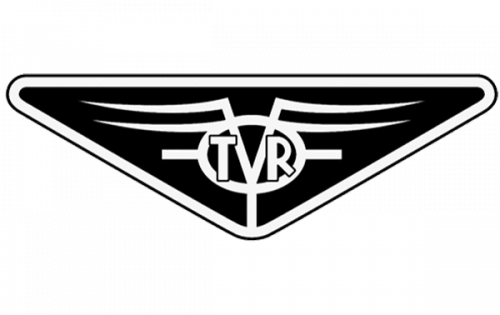
- Design: Smooth triangular badge stretched horizontally with rounded angles, central stylized TVR monogram, V extended into sharp wings, enclosed in horizontally extended oval with three straight lines radiating outward
- Colors: Black field with double white and black outline, white monogram
- Changes: First use of TVR emblem on a car in 1954
- Context: Introduced at founding and used during the Trevor Wilkinson era until the early 1960s
1961 – 2010: Classic Three-Dimensional Logo
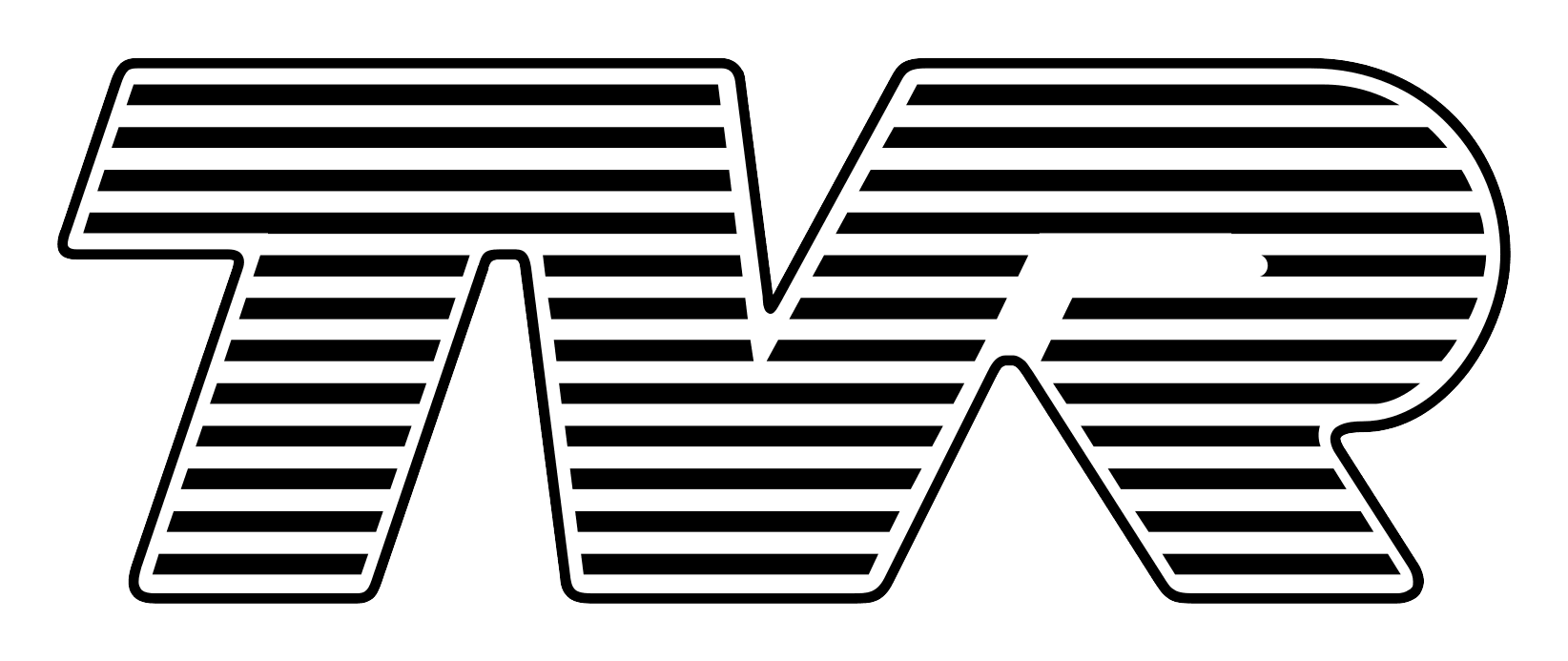
- Design: Horizontally striped black pattern, all three letters connected with T bar merging with left bar of V and V and R sharing one vertical bar, bold sans-serif typeface
- Colors: Silver-metallic with black stripes
- Changes: Replaced the original triangular emblem with a new connected lettering style
- Context: Coincided with early production growth and remained in use through Lilley and Wheeler ownership eras
2010 – 2017: Enhanced 3D Logo
- Design: Thinner more elegant contours, metallic striped inscription with visible shadow for volume, flash of light on the left angle of the T
- Colors: Elevated metallic palette with added gloss
- Changes: Updated contours and added gloss effects while retaining the connected letter structure
- Context: Visual modernization that preceded the launch of new models under British syndicate control
2017 – Today: Modern Flat Design
- Design: Simplified flat style, iconic custom connected lettering retained, wider white gap between T bars for improved negative space
- Colors: Black on white background, monochrome presentation
- Changes: Removed metallic texture, contouring and 3D effects in favor of clean flat styling
- Context: Introduced alongside new model launch plans under the syndicate of British businessmen led by Les Edgar
Typography and Color in TVR Logos
Custom italicized sans-serif typeface with extra-thick lines forms the basis of the TVR emblem across all eras after the original design. The letters are merged to create a unique memorable wordmark based on traditional sans-serif forms. This connected lettering remains the core visual element of the TVR symbol.
The color palette has stayed primarily monochrome using black, white and silver-metallic tones. These choices help convey confidence, authority, stability and professionalism in the TVR badge. Design consistency across decades reinforces the brand’s identity as a British manufacturer of high-performance sports cars.
The evolution of the TVR logo mirrors key periods in the company’s history from its 1946 founding through multiple ownership transitions to its current era under British syndicate leadership. Each update to the TVR car symbol has balanced heritage with contemporary design expectations.