Key facts
- Years active
- 1909–1940
- Founded by
- Robert Craig Hupp, Charles Hastings
- Country
- United States
- Headquarters
- Detroit, Michigan, United States
- Legal name
- Hupp Motor Car Company
- Famous models
- Model 20, Century Six, Skylark
Brand Overview
The Hupp Motor Car Company produced Hupmobile vehicles and automotive parts from 1909 until 1940. Robert Craig Hupp founded the company in 1909 with financial support from co-founder Charles Hastings. Headquarters were located in Detroit, Michigan, where the first factory opened at 345 Bellevue Avenue.
Hupmobile History and Milestones
The brand introduced its first car, the Model 20, at the Detroit Auto Show in 1909. In 1911 the company pioneered all-steel bodies in collaboration with Hale & Kilburn, Edward Budd, and Joseph Ledwinka. This engineering step strengthened its position in the early automotive market.
Robert Craig Hupp left the company in 1912-1913, after which a new factory was built at Mt. Elliott and Milwaukee. DuBois Young became president in 1924. The company shifted focus from four-cylinder to eight-cylinder engines in 1925 and moved toward larger, more expensive vehicles.
A collaboration with Raymond Loewy began in 1932, bringing flashy modern designs. An aerodynamic restyle by Loewy appeared in 1934. Internal conflicts and an attempted hostile takeover occurred in 1935. Manufacturing was suspended temporarily in 1937, followed by major asset sales.
In 1938 the company acquired Cord 810 production dies and partnered with Graham-Paige to create the new Skylark model. Limited production of the Skylark started in 1939. The Hupp Motor Car Company ceased all operations in 1940.
Key milestones include:
- 1909: Company founded and first car introduced
- 1911: All-steel body innovation
- 1912-1913: Founder departs and new factory opens
- 1932: Raymond Loewy collaboration begins
- 1934: Aerodynamic restyle introduced
- 1938: Cord 810 dies acquired for Skylark
- 1939: Skylark production starts
- 1940: Company becomes defunct
Hupmobile Logo Evolution
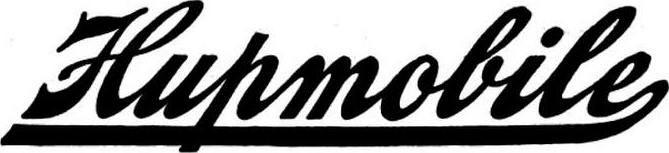
Hupmobile used radiator emblems and grille badges as its primary branding elements throughout its history. These metal plates displayed the manufacturer name and evolved alongside major body and styling changes. The logo served as a small but distinctive trust symbol on every vehicle.
1909-1920s: Early Emblems
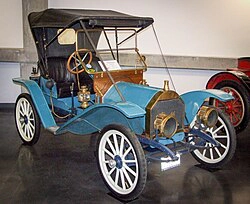
- Design: Classic radiator emblem shape displaying the Hupp name
- Colors: Colorful metal finishes
- Changes: Simple and durable construction suited to early automobiles
- Context: Aligned with the company’s founding period and first factory location
This early period of the Hupmobile logo helped build recognition for the new Detroit manufacturer. The Hupmobile emblem was a key part of every vehicle produced in those years.
1932-1934: Loewy Influence
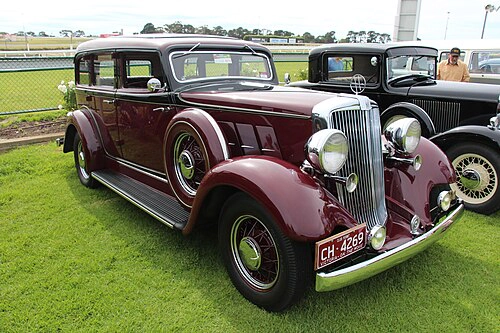
- Design: Flashy, streamlined grille badge
- Colors: Updated metal finishes matching new body colors
- Changes: Shift toward more contemporary and bold forms
- Context: Directly tied to the aerodynamic restyle introduced in 1934
The collaboration with Loewy marked a clear turning point in Hupmobile logo history. This era produced some of the most distinctive grille designs the brand ever used.
1939-1940: Skylark Final Grille
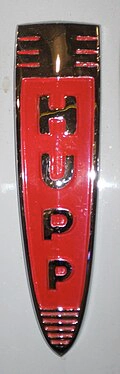
- Design: Unique grille shape created for the Skylark
- Colors: Metal construction with period-appropriate finishes
- Changes: More elaborate and distinctive than previous emblems
- Context: Final branding element before the company ceased operations in 1940
This last evolution of the Hupmobile car logo produced a design that later influenced 1940s Lincoln Continental grilles. The Hupmobile badge on these limited-production vehicles represents the brand’s concluding visual statement.
Hupmobile Legacy
The brand left a lasting mark through its innovative all-steel bodies introduced in 1911 and its later design collaborations. Its final grille design influenced Lincoln Continental models in the 1940s, showing the quality of its late-period styling work. A radiator emblem collection connected to Hupmobile is housed at the Smithsonian Institution.
Dealership buildings from the Hupmobile era remain recognized as historic landmarks in cities such as Omaha, Nebraska and Washington, D.C. The Hupmobile symbol continues to be studied by enthusiasts interested in early American automotive branding and radiator emblem design. Images and information about the brand’s visual history remain important references for collectors and logo researchers today.
The various Hupmobile logo images from different periods illustrate how one company’s branding adapted to major changes in the automotive industry across three decades. These designs provide a clear record of the brand’s evolution from its founding in 1909 until its closure in 1940.