Key facts
- Years active
- 1905–1929
- Founded by
- Pietro Diatto, Vittorio Diatto
- Country
- Italy
- Headquarters
- Turin, Italy
- Legal name
- Autocostruzioni Diatto
- Famous models
- Tipo 20, Tipo 30, 8C, Unico
Brand Overview
Diatto began as a carriage manufacturing company in Turin, Italy, founded by Guglielmo Diatto in 1835. The business remained focused on horse-drawn vehicles for seven decades before the grandsons Vittorio Diatto and Pietro Diatto made the strategic decision to enter the automobile market. In 1905 the company formed the Société Diatto-A. Clément partnership with Adolphe Clément-Bayard, marking the official start of automotive production that lasted until 1929.
The Italian pioneer emphasized performance-oriented automobiles with innovative engineering. At its peak the Turin facility employed around 500 workers and produced approximately 250 cars per year between 1905 and 1909. World War I brought a temporary shift toward firearms manufacturing before the company returned to vehicle production and ultimately ceased automobile manufacturing in 1929. Some sources note the brand legacy continued until 1955.
Brand Timeline
- 1835: Guglielmo Diatto establishes carriage manufacturing company in Turin
- Early 1900s: Strategic decision to enter automobile market
- 12 April 1905: Founding of Société Diatto-A. Clément partnership with approximately 500 employees
- 1905–1909: Production of multiple car classes with peak output of around 250 cars per year
- 1909–1915: Reduction to single model known as the Unico equipped with a 2.2-liter 20 hp engine
- 1911–1915: Focused production on the Unico model
- World War I: Company shifts part of operations to firearms production
- 1929: Ceases automobile manufacturing
- Post-1929: Brand legacy continues as noted in sources until 1955
Diatto Logo Evolution
1835 – 1904: Carriage Manufacturer Crest

Limited information survives about the visual identity used during the carriage period. The early Diatto emblem is presumed to have featured traditional text or heraldic symbols connected to the craftsmanship of horse-drawn vehicles in Turin. This first logo era represented the brand’s original identity as a respected Italian maker of quality carriages.
- Design: Traditional text-based or heraldic crest elements
- Colors: Not documented in available sources
- Changes: Served as the sole visual identity for nearly seventy years
- Context: Aligned with the company’s founding in 1835 as a carriage manufacturer
1905 – 1929: Diatto Motor Car Logo

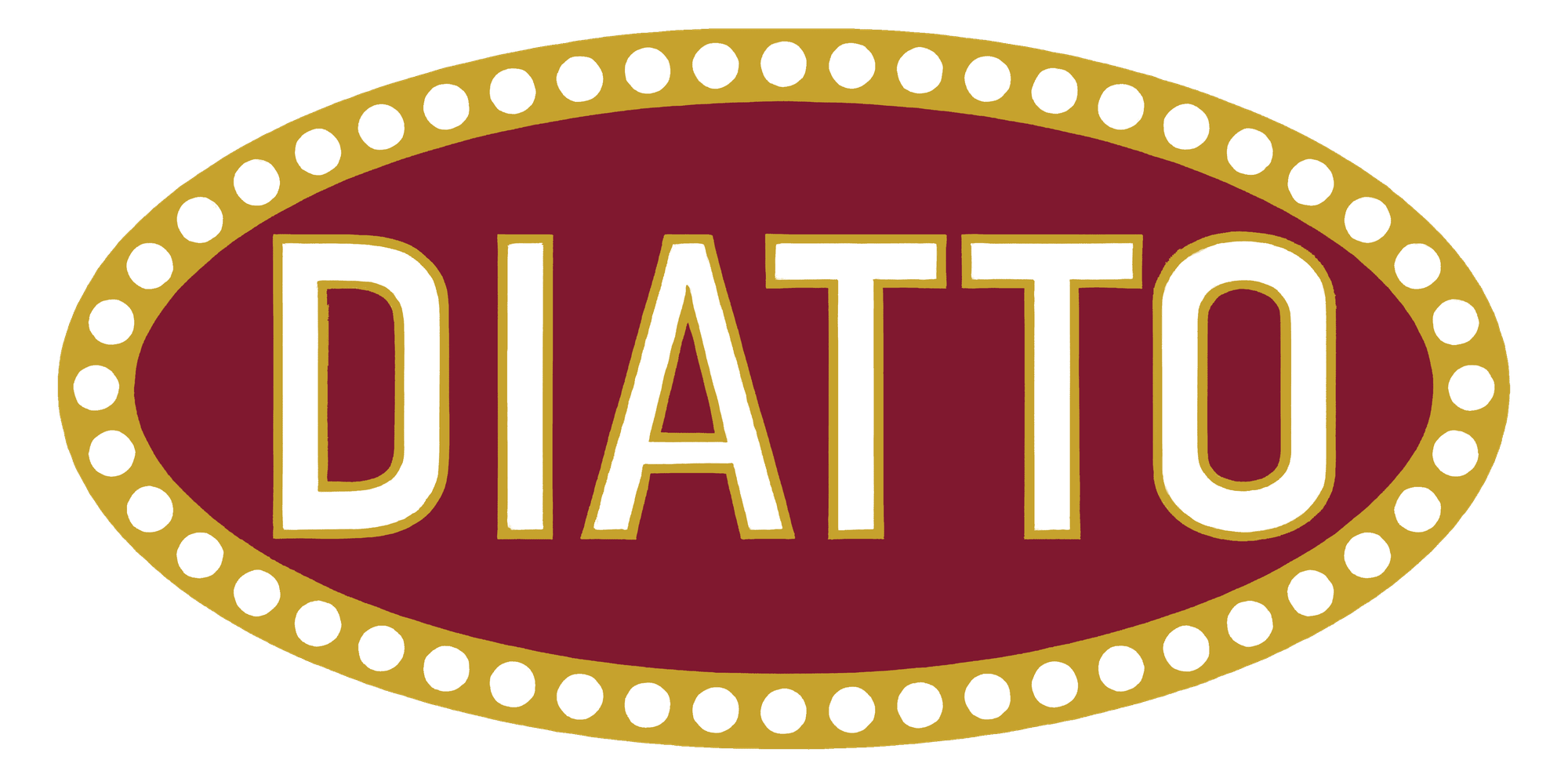
The transition to automobile production in 1905 prompted the adoption of a modern Diatto logo that reflected the brand’s new focus on motor cars. This automotive era emblem incorporated ovoid and winged design elements while prominently displaying the Diatto name. The visual update coincided with the formation of the Société Diatto-A. Clément partnership and the company’s entry into the competitive automotive market.
- Design: Ovoid shape with winged elements and prominent typography
- Colors: Period-appropriate tones consistent with early Italian automotive branding
- Changes: Complete redesign to signal the shift from carriages to automobiles
- Context: Designed to convey innovation, speed, and racing capability during the 1905-1929 production period
The primary logo change in 1905 directly aligned with the grandsons’ decision to pivot from carriage building to motor vehicle manufacturing. This new Diatto car logo was created to communicate performance and engineering excellence as the company began producing models suited for both road and competition use. No additional logo updates occurred after this introduction or following the end of car production in 1929.