Key facts
- Years active
- 1997–2009
- Founded by
- Freightliner Corporation
- Country
- United States
- Headquarters
- Redford Township, Michigan, United States
- Parent company
- Daimler Trucks North America (Freightliner)
- Legal name
- Sterling Trucks Corporation
- Famous models
- Acterra, A-Line, L-Line, Bullet 4500, Bullet 5500
Sterling Brand Overview
Sterling Trucks built Class 6 to 8 commercial vehicles for the North American market from 1997 to 2009. The brand was created by Freightliner Corporation, then a subsidiary of Daimler-Benz, after Freightliner bought the heavy-truck business of Ford Motor Company in 1997. Ford’s Blue Oval trademark was not part of that sale, so the acquired Louisville and Aeromax trucks needed a new badge, and Sterling was born to wear it.
The name itself was not new. A separate company called the Sternberg Motor Truck Company had built heavy trucks in Milwaukee, Wisconsin, from 1906, renaming itself Sterling Motor Truck Company during the First World War. That original Sterling built rugged, chain-driven trucks for mining, logging and construction work until White Motor Corporation bought it in 1951; the Sterling name was retired around 1953. It had sat unused for more than four decades, which let Freightliner revive it in 1997 without a trademark conflict.
Sterling launched on March 1, 1998, with three model lines built from the tooling Freightliner had acquired: the L-Line conventional, a continuation of the Ford Louisville; the A-Line tractor, a continuation of the Ford Aeromax; and the cabover Cargo. The L-Line was expected to make up most of Sterling’s early sales and became the brand’s mainstay. The Acterra medium-duty range followed in 1999, and later additions included the Bullet, a rebadged Dodge Ram 4500/5500 chassis cab introduced for 2007, and the 360, a rebadged Mitsubishi Fuso Canter. Sterling was slotted between Freightliner and Western Star in Daimler’s North American brand lineup, aimed at fleet and vocational buyers such as construction firms, waste haulers and utilities. Trucks were assembled in St. Thomas, Ontario, and Portland, Oregon, with the brand headquartered in Redford Township, Michigan.
Daimler Trucks North America announced on October 14, 2008 that it would discontinue Sterling to concentrate its North American business on the Freightliner and Western Star brands. Sterling stopped taking new orders in January 2009, the St. Thomas plant closed that March, and Portland production wound down the following year, ending Sterling’s 12-year run.
Sterling Logo History and Evolution
1997–2009: The Silver Oval “S”
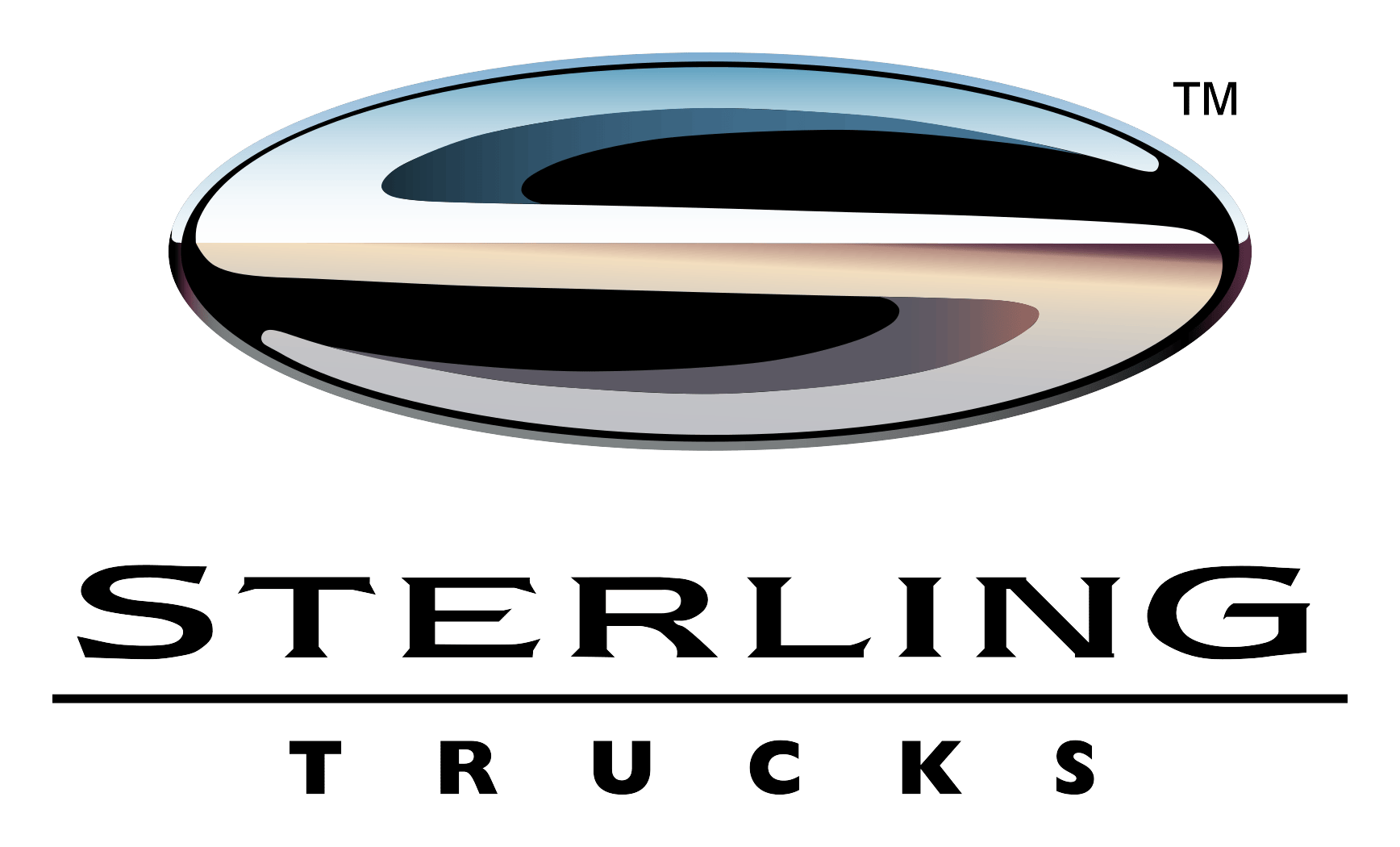
Sterling used a single badge for its entire life. It is a wide oval carrying a large, stylized letter S rendered in chrome-like tones of silver, blue and black, sitting above the “Sterling Trucks” wordmark in a bold serif face. The oval shape was a practical choice as much as a design one: the Louisville and Aeromax cabs Sterling inherited from Ford had grille and hood recesses cut for an oval badge, so Daimler designed a new emblem to fit the same mounting points rather than reworking the sheet metal. No redesign followed before the brand was retired in 2009.
Who Owned Sterling Trucks
Sterling was owned by Freightliner Corporation from its 1997 founding, and Freightliner itself was a subsidiary first of Daimler-Benz, then of DaimlerChrysler after the 1998 merger, and finally of Daimler AG once that merger unwound in 2007. From 2008, Sterling was folded administratively into Daimler Trucks North America alongside Freightliner and Western Star, shortly before the brand was shut down entirely in 2009.
FAQ
What does the Sterling Trucks logo mean?
The silver S in an oval had no publicized symbolic meaning beyond representing the brand name. Its oval outline was shaped to fit the badge recesses already stamped into the Ford-designed truck cabs that Sterling inherited.
Who founded Sterling Trucks?
Freightliner Corporation created Sterling Trucks Corporation in 1997 after buying Ford’s heavy-truck product lines. Freightliner itself was a Daimler-Benz subsidiary at the time.
What happened to Sterling Trucks?
Daimler Trucks North America discontinued Sterling in 2009 to focus its North American business on the Freightliner and Western Star brands. Order intake stopped in January 2009 and the last assembly plants closed by 2010.
Is Sterling Trucks related to the older Sterling truck brand from the 1900s?
Only in name. An unrelated Milwaukee company built trucks as the Sterling Motor Truck Company from around 1915 until White Motor Corporation retired the name in the early 1950s. Freightliner revived the dormant trademark for its own, unrelated brand in 1997.
What models did Sterling Trucks make?
Sterling’s range included the L-Line conventional and A-Line tractor, descended from the Ford Louisville and Aeromax, the Acterra medium-duty truck, the Dodge-based Bullet 4500 and 5500, and the Mitsubishi Fuso-based 360.