Key facts
- Years active
- 1890–1969
- Founded by
- William Riley Jr., Percy Riley
- Country
- United Kingdom
- Headquarters
- Coventry, United Kingdom
- Parent company
- BMW Group
- Legal name
- Riley Motors Limited
- Famous models
- Nine, RM, Pathfinder, Elf, Kestrel
- Slogan
- “As old as the industry, as modern as the hour”
Riley Brand History
The Riley Cycle Company was founded in 1890 by William Riley Jr. in Coventry, England, initially as a bicycle manufacturer. It was incorporated in 1896 as The Riley Cycle Company Limited. Percy Riley built the first car in 1898 featuring a mechanically operated inlet valve, marking the company’s entry into automotive manufacturing. By 1907-1912 the focus had fully shifted to automobiles.
Key name changes included Riley (Coventry) Limited in 1912 and later Riley Motors Limited in 1950. Major ownership changes occurred in 1938 when the company was acquired by William Morris and transferred to Morris Motors Limited as part of the Nuffield Organization. In 1968 it merged into the British Leyland Motor Corporation. Production officially ended in July 1969 and the brand was phased out. The current trademark owner is BMW.
Key People and Family Contributions
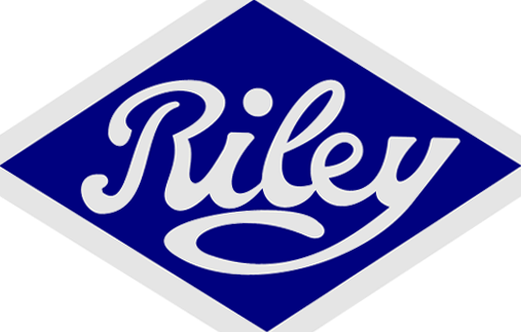
William Riley Jr. founded the company but initially opposed automobiles. Percy Riley, an engineering pioneer, developed the first mechanically operated inlet valve in 1898, founded the Riley Engine Company in 1903, and created the Riley 9 engine in 1926. Victor Riley focused on core business matters and later became involved in the luxury Autovia project. Allan, Stanley, and Cecil Riley also joined the engineering and manufacturing efforts. Harry Rush designed the iconic blue diamond logo.
Riley Product and Technological Milestones
Percy Riley built the first car with a mechanically operated inlet valve in 1898. The Riley 9 engine arrived in 1926 and featured hemispherical combustion chambers and inclined overhead valves, becoming one of the most significant engine developments of the 1920s. Racing successes followed at Brooklands, the Ulster TT, and Le Mans in 1934 with multiple class wins and team prizes.
The late 1920s to 1930s period of overextension with too many models led to financial difficulties in 1937-38 and receivership. After the 1938 Nuffield acquisition the RM Series (RMA, RMB) was launched under the theme of Magnificent Motoring, representing the final expression of traditional Riley character.
Riley Logo Evolution
1918 – 1969: Blue Diamond Logo
The blue diamond logo was introduced in 1918 during post-WWI company restructuring when the Nero Engine Company joined Riley (Coventry) as the sole automobile producer. It served as the unifying symbol for the brand throughout its history under both Nuffield and British Leyland ownership. The Riley car logo featured the motto “As old as the industry, as modern as the hour” and represented the company’s engineering heritage and racing success.
- Design: Blue diamond badge with Riley lettering
- Colors: Blue
- Changes: No major redesigns documented
- Context: Introduced at the moment the company fully committed to automobile manufacturing as a unified entity
This Riley symbol became closely associated with the 1926 Riley 9 engine success and the 1934 Le Mans performance. The Riley emblem remained unchanged after the 1938 acquisition by Nuffield, helping maintain brand continuity during the transition. The Riley logo history reflects the company’s journey from bicycle maker to respected British performance car manufacturer, with the Riley badge now serving as a historical emblem of the defunct marque.